September 16, 2026
What is mental math and why does it matter?
What is mental math: Mental math is the ability to calculate, estimate, and work with numbers in your head without…
Read more →
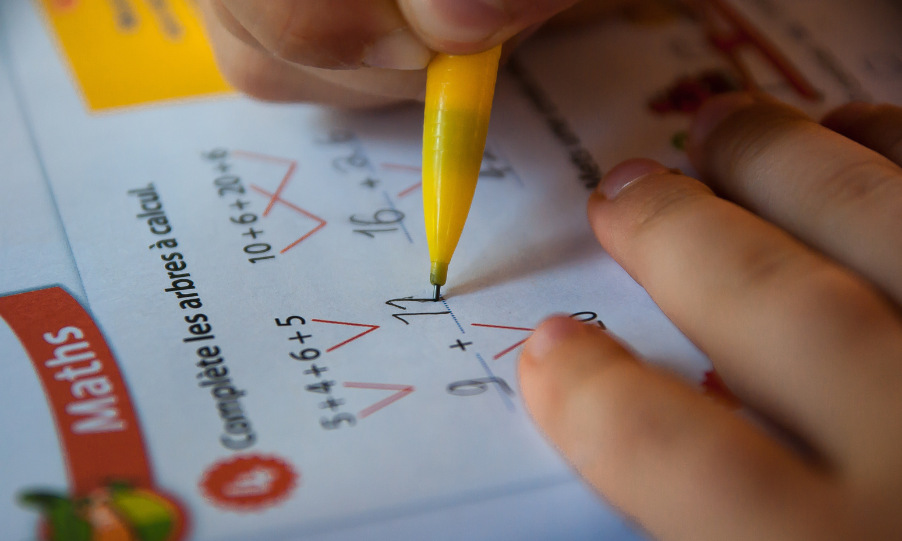
Learning how to improve mental math skills is less about memorizing clever tricks and more about developing reliable number facts, recognizing useful patterns, choosing efficient strategies, and practising them until they become easier to use.
If you want to calculate faster in your head, start with accuracy rather than speed. Strengthen basic number facts, practise techniques such as decomposition and compensation, learn common percentage relationships, estimate before calculating, and introduce timed practice only after you understand the method.
Mental math is trainable. Research on simple mental arithmetic has found that practice can affect both strategy selection and the efficiency with which strategies are used.
The most important principle is simple:
Do not try to perform a difficult calculation faster. First learn how to turn it into an easier calculation.
| If you want to improve… | Focus on |
|---|---|
| Accuracy | Basic facts and clear strategies |
| Speed | Fluency after accuracy is established |
| Addition | Number bonds, decomposition, compensation |
| Subtraction | Counting up, complements, compensation |
| Multiplication | Known facts, distributive thinking, doubling and halving |
| Division | Fact families, factors, breaking numbers apart |
| Percentages | 1%, 5%, 10%, 25%, 50% anchors |
| Estimation | Rounding and magnitude awareness |
| Exam performance | Accurate fluency plus short timed practice |
| Long-term improvement | Regular, varied practice and error review |
The most effective approach is to build mental math in layers:
basic facts → flexible strategies → accurate practice → mixed practice → timed fluency → real-world application
This is better than collecting dozens of shortcuts that only work for particular numbers.
A recent review of arithmetic-fluency research recommends combining explicit strategy instruction with structured retrieval practice and introducing time-limited work after learners demonstrate accuracy.
That distinction matters. Speed should be built on top of understanding, not used as a substitute for it.
Before trying to become faster, find out what currently slows you down.
Take a short set of calculations covering:
| Skill | Example |
|---|---|
| Addition | 47 + 38 |
| Subtraction | 83 − 47 |
| Multiplication | 17 × 6 |
| Division | 144 ÷ 12 |
| Percentages | 15% of 200 |
| Estimation | Approximately 49 × 21 |
Record:
Accuracy: How many were correct?
Time: Which questions caused long pauses?
Method: Did you know an efficient strategy, or did you mentally reproduce a written algorithm?
Error type: Did the mistake come from a forgotten fact, losing track of an intermediate number, or using the wrong strategy?
A baseline gives you something more meaningful to improve than simply saying, “I want to be faster.”
Mental calculation becomes unnecessarily difficult if every small fact needs to be recalculated.
Useful facts to know fluently include:
For example, if you immediately know:
8 × 7 = 56
then calculating:
8 × 17
becomes easier:
8 × 10 + 8 × 7
80 + 56 = 136
Fluent fact recall reduces the amount of mental work required inside larger calculations.
U.S. Institute of Education Sciences guidance identifies fluent retrieval of basic arithmetic facts as an important component of mathematics intervention and recommends dedicated practice for learners who struggle with this area.
The goal is not to memorize every possible arithmetic question. It is to memorize enough foundational relationships that they can serve as building blocks.
A number bond is a pair or group of numbers that combine to form a useful total.
For example:
8 + 2 = 10
65 + 35 = 100
These relationships make many calculations easier.
Instead of:
38 + 27
you can move 2 from 27 to 38:
40 + 25 = 65
For:
73 − 28
think of 28 as being 2 away from 30:
73 − 30 + 2
43 + 2 = 45
This ability to create round numbers is one of the most reusable mental-math skills you can develop.
Math Master’s Smart Tips & Tricks section includes strategies and practice areas covering addition, subtraction, multiplication, division, equations, averages, sequences, statistics, and other topics.
This strategy is often called decomposition or partitioning.
Instead of calculating:
64 + 37
break the second number apart:
64 + 30 = 94
Then:
94 + 7 = 101
For multiplication:
17 × 6
think:
10 × 6 = 60
7 × 6 = 42
Then:
60 + 42 = 102
This works because numbers can be decomposed while preserving their mathematical value.
The aim is to choose parts that are easy for you to manage mentally.
For example:
48 + 36
could be solved as:
48 + 30 + 6
or:
50 + 36 − 2
Both are valid.
Mental math becomes stronger when you can choose between strategies instead of depending on one fixed method.
Compensation means temporarily changing a number to make the calculation easier, then correcting the difference.
Consider:
68 + 29
Round 29 to 30:
68 + 30 = 98
You added one too much:
98 − 1 = 97
Another example:
198 + 47
Think:
200 + 47 = 247
Then:
247 − 2 = 245
For multiplication:
49 × 6
use:
50 × 6 = 300
Then subtract one extra group of 6:
300 − 6 = 294
This is one reason skilled mental calculators often appear fast: they may not be performing the original calculation more rapidly. They are choosing a simpler equivalent calculation.
When one factor is even, doubling one number and halving the other can make multiplication easier.
Take:
25 × 16
Double 25:
50 × 8
Again:
100 × 4
Answer:
400
Another example:
14 × 35
Double 35 and halve 14:
7 × 70
Answer:
490
The multiplication result stays the same because:
a × b = (2a) × (b ÷ 2)
when halving produces a convenient value.
Do not force this method on every multiplication problem. Mental math is about selecting a method that fits the numbers.
Many percentage calculations become much easier once a few values are automatic.
The most useful anchors include:
50% = one-half
25% = one-quarter
10% = one-tenth
5% = half of 10%
1% = one-hundredth
Suppose you need:
15% of 240
Calculate 10%:
24
Calculate 5%:
12
Then:
24 + 12 = 36
For:
35% of 200
you could use:
30% = 60
5% = 10
Therefore:
35% = 70
These percentage anchors are useful for discounts, tips, budgets, exam problems, and quick comparisons.
Estimation is one of the most underused mental-math habits.
Suppose you need:
51 × 19
Before calculating exactly, estimate:
50 × 20 ≈ 1,000
Now calculate:
51 × 20 = 1,020
Subtract 51:
1,020 − 51 = 969
Because 969 is close to your estimate of 1,000, the result is plausible.
If you had obtained 9,690, your estimate would immediately reveal that something was wrong.
Estimation develops a sense of numerical magnitude and gives you a built-in way to check answers from mental calculations, calculators, spreadsheets, and AI tools.
Timed mental math can be useful, but timing a skill too early can encourage guessing, anxiety, or repeated errors.
The Institute of Education Sciences recommends timed activities as one component of fluency-building and specifically advises introducing them after students have already worked with and learned the relevant concept. Its guidance describes short timed activities of roughly one to five minutes rather than making speed the entire lesson.
A practical rule is:
Untimed practice: learn and understand the strategy.
Accurate practice: solve it reliably.
Timed practice: gradually reduce hesitation while protecting accuracy.
If you answer 20 questions quickly but get six wrong, speed is not yet the main problem.
A wrong answer contains useful information.
Suppose you calculate:
47 + 28 = 65
Instead of simply marking it wrong, determine what happened.
Perhaps you used:
47 + 20 = 67
but then accidentally subtracted 2 instead of adding 8.
That means the underlying strategy was reasonable; the problem was tracking the intermediate step.
Common error sources include:
| Error | What to work on |
|---|---|
| Forgot a basic fact | Fact retrieval |
| Lost an intermediate result | Simpler decomposition |
| Chose an awkward strategy | Strategy selection |
| Rushed | Accuracy before speed |
| Misread the operation | Attention |
| Repeated the same wrong fact | Corrective practice |
Research on mental arithmetic suggests that practice can change both which strategies people select and how efficiently they execute them.
Improvement therefore involves refining how you think, not simply completing more questions.
You do not necessarily need long practice sessions.
A useful daily routine is:
Practise multiplication facts, complements, doubles, halves, or fraction-percentage equivalents.
Do not race.
Aim for confident recall.
Choose one method for the session.
For example:
Monday: compensation
Tuesday: decomposition
Wednesday: doubling and halving
Thursday: percentages
Friday: estimation
Work on similar examples until you can explain why the strategy works.
Mix several operations so you must decide which strategy fits.
This is important because real mental math rarely tells you:
“Use compensation now.”
You need to recognize the opportunity yourself.
Only use the timer on skills you can already perform accurately.
Try to maintain your accuracy while reducing hesitation.
Look at any mistakes.
Ask:
What caused the error?
Was there a simpler approach?
Could I estimate the answer first next time?
Math Master is designed around interactive questions, puzzles, quizzes, and games across addition, subtraction, multiplication, division, percentages, algebra, geometry, and other topics. You can use Math Master to add varied calculation practice rather than repeating only one type of exercise.
Rather than trying to master everything simultaneously, use progressive practice.
| Week | Main goal | What to practise |
|---|---|---|
| Week 1 | Accuracy and foundations | Basic facts, number bonds, doubles, halves |
| Week 2 | Flexible strategies | Decomposition, compensation, rounding |
| Week 3 | Wider calculation skills | Multiplication, division, percentages, estimation |
| Week 4 | Fluency and application | Mixed problems, short timed sets, real-world calculations |
Identify facts you repeatedly stop to calculate.
If 7 × 8 always causes hesitation, practise it together with related facts:
8 × 7 = 56
56 ÷ 8 = 7
56 ÷ 7 = 8
Work with relationships rather than isolated answers.
Take awkward numbers and make them friendlier.
Examples:
99 + 47 → 100 + 47 − 1
61 − 29 → 61 − 30 + 1
49 × 7 → 50 × 7 − 7
Add percentage anchors, multiplication decomposition, division relationships, and estimation.
The objective is not to learn dozens of tricks.
It is to have several general-purpose methods you can apply across many numbers.
Use mixed questions so that you have to recognize the appropriate technique yourself.
If accuracy remains strong, add one- to five-minute timed sets.
Compare results with your original baseline rather than comparing yourself with someone else.
Speed alone is a poor measurement.
Track four things:
| Metric | What improvement looks like |
|---|---|
| Accuracy | Fewer incorrect answers |
| Response time | Less hesitation on familiar calculations |
| Strategy flexibility | More than one way to solve a problem |
| Estimation | Better ability to predict answer ranges |
For example:
20 questions
14 correct
6 incorrect
Average time: 9 seconds
20 questions
19 correct
1 incorrect
Average time: 7 seconds
That is meaningful progress because both accuracy and efficiency improved.
A learner who reduces average time from nine seconds to five seconds while accuracy falls from 90% to 60% has not necessarily improved.
Worksheets and apps are useful, but everyday life creates additional opportunities to practise.
Estimate the total before checkout.
Calculate approximately how much a discount will save.
Estimate arrival time from distance and journey duration.
Split a bill mentally before using a calculator.
Double or halve ingredient quantities.
Estimate percentages, totals, differences, or rough averages before opening a spreadsheet.
The habit to develop is:
estimate first → calculate → verify when necessary
Not every everyday calculation should be done mentally. The purpose is to practise when the numbers are manageable and use tools when precision or complexity requires them.
The underlying strategies are the same, but practice priorities may differ.
| Students may prioritize | Adults may prioritize |
|---|---|
| Addition and subtraction fluency | Percentages and discounts |
| Multiplication tables | Estimating totals |
| Division facts | Ratios and comparisons |
| School arithmetic | Budget calculations |
| Exam speed | Workplace calculations |
| Number sense | Checking digital results |
Students preparing for timed mathematics or aptitude tests may eventually benefit from more deliberate speed practice.
Adults may gain more from calculations connected to shopping, finance, measurements, percentages, and work.
Both groups benefit from the same principle: understand the numbers before chasing speed.
A technique that only works for one unusual number pattern has limited value.
Learn versatile strategies first.
Pressure is not necessary while learning a method.
Understand and stabilize the technique before racing against a clock.
Practice should become gradually more challenging.
Once a skill feels automatic, increase the number size, mix operations, or apply it in a new context.
A fast wrong answer is still wrong.
Track accuracy alongside time.
People naturally prefer practising things they are already good at.
Your biggest improvement often comes from identifying the facts and strategies that repeatedly interrupt your flow.
For manageable calculations, try estimating or solving mentally before reaching for a device.
You can still use the calculator afterward to verify the result.
Yes, basic multiplication facts are highly useful for mental calculation.
Knowing:
6 × 8 = 48
instantly makes many other calculations easier.
For example:
16 × 8
becomes:
10 × 8 + 6 × 8
80 + 48 = 128
But memorization should support mathematical reasoning rather than replace it.
Recent work on arithmetic fluency argues that memorization and thinking strategies should not be treated as opposing approaches. Both can contribute when they are taught and practised appropriately.
Use this progression:
Step 1: Understand the strategy.
Know why the method works.
Step 2: Practise slowly.
Solve similar questions correctly.
Step 3: Reduce unnecessary steps.
Look for a more efficient representation.
Step 4: Retrieve common facts automatically.
Reduce the amount you must calculate from scratch.
Step 5: Mix question types.
Practise selecting strategies independently.
Step 6: Add short timed rounds.
Increase pace without letting accuracy collapse.
Step 7: Review errors.
Fix recurring problems rather than simply completing more questions.
This approach is more sustainable than starting with a stopwatch and trying to force yourself to think faster.
Use compensation:
48 + 40 − 1 = 87
Think:
72 − 40 + 2 = 34
Think:
100 × 7 = 700
10%:
16
5%:
8
Therefore:
15% = 24
Round:
200 × 50 = 10,000
The exact answer should therefore be somewhere close to 10,000.
Try these kinds of calculations regularly, then move to less convenient numbers.
For more calculation techniques, explore Math Master’s math tips and shortcuts rather than trying to memorize unrelated tricks from many different systems.
There is no reliable universal number of days.
Improvement depends on:
Claims such as “master mental math in 30 days” should therefore be treated as practice frameworks rather than guarantees.
Research does show that arithmetic practice can influence calculation strategies and efficiency, but the effects depend on the task and type of practice.
A better goal is measurable progress:
fewer errors, less hesitation, stronger estimation, and more flexible strategy selection.
Short, regular practice is a practical approach.
For learners working specifically on arithmetic fact fluency, evidence-based education guidance has recommended dedicating several minutes of intervention sessions to fact retrieval, while newer guidance describes short timed activities as one component of a broader mathematics programme.
For independent practice, five to ten focused minutes is a reasonable starting routine—not a magic number.
Consistency matters more than completing an exhausting session once a week.
If competition helps motivate regular practice, Math Master also provides a global leaderboard built around points, levels, and continued practice.
Start by identifying your weakest basic facts and calculations, then practise a small number of reusable strategies such as decomposition, compensation, number bonds, doubling and halving. Once you can use them accurately, introduce mixed and timed practice.
Mental calculation is a skill that can be practised. Research on arithmetic practice shows changes in strategy use and efficiency following practice, although the amount and type of improvement vary among tasks and learners.
Accuracy should generally come first. Evidence-based guidance on mathematics fluency recommends introducing time-limited practice after learners have developed understanding and accuracy with the relevant material.
Use number bonds, decomposition, and compensation. For example, solve 58 + 29 as 58 + 30 − 1 = 87 instead of mentally reproducing column addition.
Build fluent multiplication facts first, then practise decomposition, doubling and halving, and multiplication around convenient numbers. For example, calculate 49 × 8 as 50 × 8 − 8.
Some are useful when they express a general mathematical relationship. A trick that you understand and can apply to many problems is more valuable than an isolated shortcut you have memorized without understanding.
Ten minutes is a practical starting routine, but there is no universal amount that guarantees improvement. Practice quality, consistency, difficulty, feedback, and your current skill level all matter.
It can reduce time spent on routine arithmetic in quantitative questions. Exam learners should first build accuracy and number fluency, then practise appropriate shortcuts and timed calculations that match the exam format.
Yes, particularly if they want to improve comfort with percentages, estimation, budgeting, price comparisons, ratios, and checking calculations produced by digital tools.
An app can provide convenient repeated practice and immediate questions, but it works best when you also understand the strategies behind your answers. Practice should develop reasoning as well as response speed.
Improving mental math is not about learning to perform the same calculation at superhuman speed.
It is about learning to see simpler calculations hiding inside harder ones.
Build dependable number facts. Learn general-purpose techniques such as decomposition, compensation, doubling and halving. Develop percentage anchors. Estimate before calculating. Practise accurately before adding time pressure. Most importantly, examine your mistakes and change your strategy when necessary.
Mental math improves when practice becomes deliberate rather than random.
Once you understand the methods, use Math Master to practise addition, subtraction, multiplication, division, percentages, mixed arithmetic, quizzes, and other mathematical skills through interactive questions and games.
Math Master editorial team
The Math Master editorial team creates practical educational resources designed to help learners strengthen arithmetic, number sense, calculation skills, and mathematical problem-solving. Math Master is developed by Pavans Group Techsoft Private Limited and provides interactive mathematics practice through questions, puzzles, quizzes, games, and skill-based learning activities.
What is mental math: Mental math is the ability to calculate, estimate, and work with numbers in your head without…
Read more →